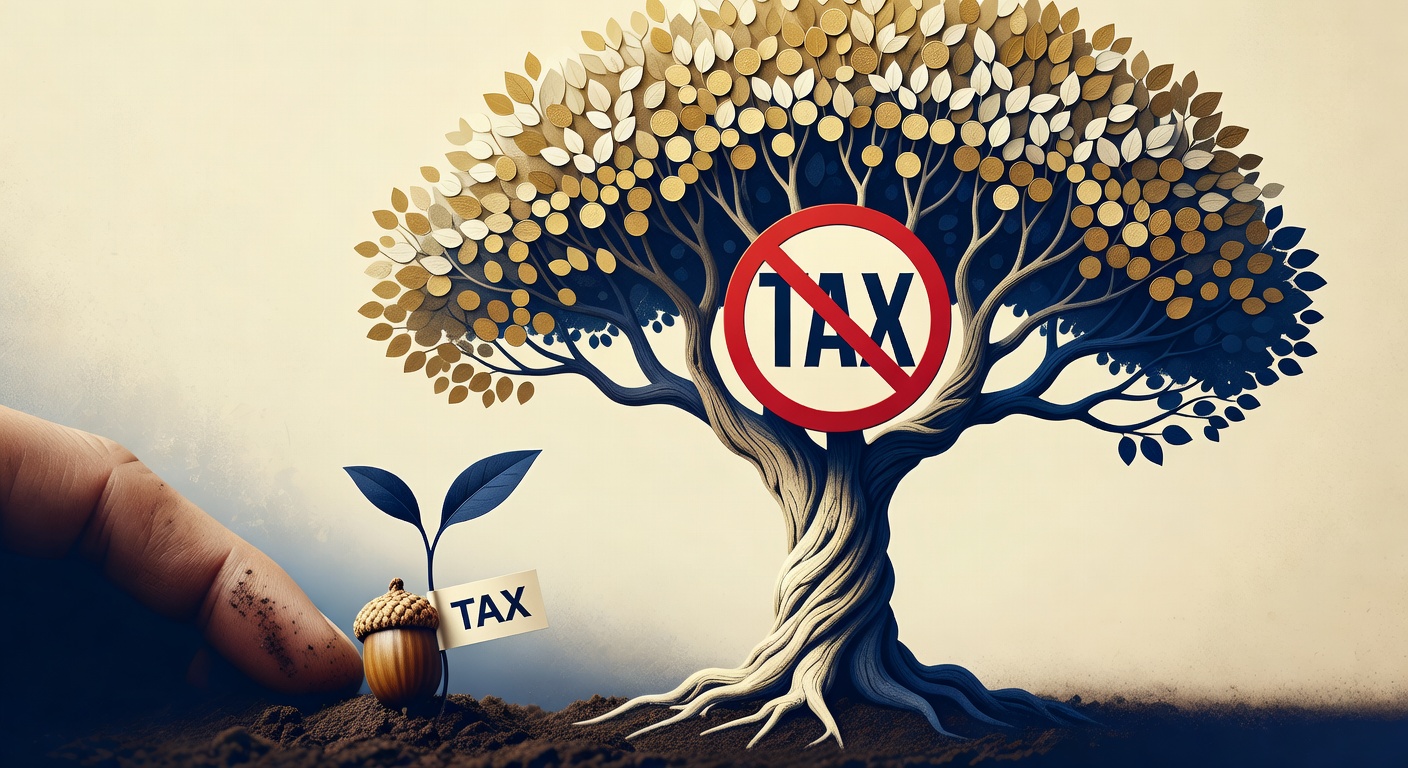
Pay Tax on the Seed, Not the Harvest: Roth vs. Traditional 401(k) for Smarter Retirement Tax Planning
Imagine this: You've diligently maxed out your 401(k) for decades, watching that balance swell into the millions. Retirement beckons—a yacht in the Mediterranean, grandkids' college funds secured, a legacy unfolding. Then, the tax bill arrives. Not just any bill. A seven-figure reckoning from deferred 401k taxes that eclipses your dreams. It's the harvest you've nurtured, now ripe for the IRS to claim a hefty share.
This isn't a nightmare scenario reserved for the ultra-wealthy. It's the stark reality facing many high-earning professionals like you—executives and business owners aged 40-55 with substantial 401(k) and IRA balances. You've built wealth wisely, but retirement tax planning demands more than accumulation. It requires strategy: paying tax on the seed today, not the bloated harvest tomorrow.
In this guide, we'll unpack the Roth vs. Traditional IRA and 401(k) debate through the lens of tax diversification. We'll explore why traditional accounts saddle you with future tax bombs, how Roth strategies offer freedom, and practical steps for Gen X leaders adopting a family office mindset. Let's plant smarter seeds for a tax-light retirement.
The Traditional 401(k): Why Taxing the Harvest Hurts High Earners
Traditional 401(k)s and IRAs shine in their promise: Contribute pre-tax dollars, let them compound tax-deferred, withdraw in retirement at your (supposedly) lower tax rate. It's a cornerstone of American retirement saving, luring millions with immediate tax breaks. For a high earner in the 37% bracket, every $23,000 contributed in 2024 saves $8,510 upfront.
But here's the rub—and it's a big one for your demographic. Retirement rarely means a plunge to the 12% bracket. Social Security, pensions, rental income, and part-time consulting keep you in higher lanes. Worse, Required Minimum Distributions (RMDs) kick in at age 73, forcing taxable withdrawals based on life expectancy formulas. A $2 million balance at 7% annual growth could balloon to $5.7 million by RMD age. That first RMD? Around $220,000, fully taxable, potentially bumping you into the 32% or 35% bracket.
Picture the cascade: RMDs inflate your adjusted gross income, taxing Social Security benefits more heavily (up to 85%), triggering Medicare premium surcharges (IRMAA), and even phasing out itemized deductions. Suddenly, 401k taxes aren't a gentle harvest tax—they're a torrent. High earners with large pre-tax balances face effective rates rivaling today's, minus the income needed to offset them.
The Deferred Tax Bomb: A Numbers Snapshot
Consider a 50-year-old executive with $1.5 million in a traditional 401(k). Assuming 6% net growth, it hits $4.8 million by 73. RMDs over 20 years could extract $3.2 million in principal alone—taxed at 30% average? That's nearly $1 million to Uncle Sam, pre-inflation. This isn't speculation; it's arithmetic baked into tax code realities.
High earners compound the problem. Your peak earnings now mean bigger contributions, fatter balances, fiercer RMDs. Legacy planning suffers too—leaving a traditional IRA to heirs means they pay taxes on distributions over 10 years, shrinking inheritances.
Roth 401(k) and IRA: Tax the Seed Today for a Tax-Free Harvest
Flip the script with Roth accounts: Pay tax on the seed—your contributions—upfront. Earnings grow tax-free. Qualified withdrawals after 59½? Zero tax. No RMDs during your lifetime. It's the antidote to the traditional trap, especially as tax rates hover historically low (today's top 37% vs. past highs of 70%+).
For 2024, Roth 401(k) contributions are straightforward—same $23,000 limit ($30,500 if 50+), post-tax. Many employer plans now offer them. Roth IRAs have income limits ($161,000 single/$240,000 married), but backdoor conversions bypass this for high earners.
Why now, in your 40s-50s? Time is your ally. A $10,000 Roth contribution at 7% over 20 years becomes $38,700—all yours, tax-free. Scale to annual maxes, and the power multiplies. No RMD pressure means you control withdrawal timing, filling low-tax years strategically.
The Tax on the Seed vs. Harvest Metaphor in Action
Plant taxed seeds in fertile Roth soil: Watch untaxed vines climb, yielding fruit you pluck freely. Sow untaxed seeds traditionally: Vines thrive, but the reaper demands half the bounty at harvest.
Contrast two paths for a 45-year-old with $200,000 annual income. Path A: $23,000 traditional yearly. Saves $8,500 tax now, but $1.2 million taxed harvest by 75 (assuming 32% rate). Path B: Roth equivalent. Pays $8,500 tax today (at potentially lower future rates), enjoys $1.2 million tax-free. Net: Roth wins by that $384,000.
Tax Diversification: Your Family Office Shield Against 401k Taxes
Ultra-wealthy families don't bet the farm on one tax silo. They diversify: taxable brokerage, life insurance, real estate, and a blend of pre-tax/Roth retirement accounts. As a Gen X professional, emulate this tax diversification for resilient retirement tax planning.
Aim for buckets: 40-60% Roth/post-tax, the rest traditional. Why? Flexibility. Retire in a low-tax year? Draw traditional. High-tax stretch? Roth covers needs. Heirs inherit tax-free Roths. RMDs hit? Offset with Roth liquidity.
- Conversion Ladders: Systematically convert traditional to Roth in low-income years (e.g., pre-Social Security). Pay tax now at 24% vs. 32% later.
- Mega Backdoor Roth: If your plan allows, roll after-tax 401(k) contributions (up to $69,000 total limit) into Roth.
- Qualified Charitable Distributions (QCDs): Post-70½, direct RMDs to charity—tax-free bypass.
This isn't set-it-and-forget-it. Annual reviews align with income forecasts, legislative shifts (like expiring TCJA cuts), and market cycles.
RMDs: The Silent Retirement Tax Trap
RMDs aren't optional. Uniform Lifetime Table dictates: Divide balance by factor (27.4 at 73, dropping yearly). A $3 million pot yields escalating withdrawals, stacking with other income. Solution? Preemptive Roth conversions reduce the pot, slashing future RMDs.
A Family Office Mindset for Gen X High Earners
Family offices forgo autopilot. They model scenarios: What if tax rates rise to 40%? Inflation erodes brackets? Healthcare costs soar? Proactive pros hire advisors for Monte Carlo simulations, stress-testing portfolios against tax regimes.
You're not just saving—you're architecting. Integrate Roth ladders with estate plans (trusts owning Roths), business sales (roll proceeds to Roth solo 401(k)), and lifestyle pivots. The payoff: Control. Peace. A harvest you fully savor.
Tools abound: Free IRS withholding calculators, Vanguard/Fidelity Roth converters. But complexity demands expertise—your CPA plus a fiduciary advisor versed in Roth vs. Traditional IRA nuances.
Chart Your Course: Next Steps in Retirement Tax Planning
Tax on the seed isn't deprivation—it's liberation. Shift from harvest anxiety to Roth abundance. Start small: Review your 401(k) allocation. Model conversions in a spreadsheet. Consult pros.
At Blueprint Personal CFO, we guide high achievers like you through this. Gauge your exposure with our free Retirement & Lifestyle Stress Test quiz. Answer 10 questions; get a personalized report on tax risks, diversification gaps, and action items. It's the calm first step to a fortified future.
Don't let deferred 401k taxes harvest your dreams. Plant Roth seeds today. Your legacy—and lifestyle—will thank you.
